

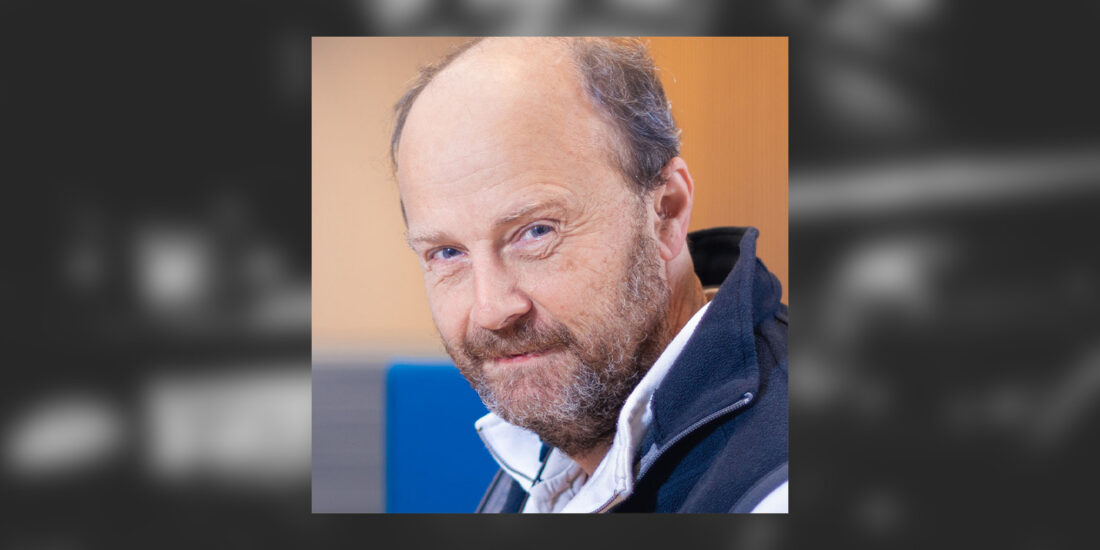
Dr François Taddei of the Learning Planet Institute, France, will present ‘Manifesto for the Planetary Mission of the University’ at The 5th Paris Conference on Education (PCE2026) and The 5th Paris Conference on Arts & Humanities (PCAH2026) in Paris, France.
François Taddei is an internationally renowned researcher whose work explores the future of learning, collective intelligence, and planetary citizenship in an age of AI and global transformation. His keynote presentation will examine how universities can evolve to foster transdisciplinary innovation, ethical leadership, and care for the global commons through collaborations across education, science, and international institutions.
This keynote presentation will be held both onsite in Paris and online via live-stream. To participate in PCE/PCAH2026 as an audience member, please register for the conference via the conference website.
The presentation will also be available for IAFOR Members to view online as part of their membership benefits. To find out more about becoming an IAFOR Member, please visit the IAFOR Membership page.
Speaker Biography
François Taddei
Learning Planet Institute, France
 François Taddei, co-founder and president of the Learning Planet Institute, is an internationally renowned researcher.
Convinced that the future of learning must be co-constructed with learners, he explores educational transitions and “planetizenship” (global citizenship) to learn how to take care of oneself, others, and the planet.
He advocates for large-scale collaborations to co-create, with all stakeholders—from young people to UNESCO and the United Nations University (UNU)—a Learning Planet Academy, powered by technology and rooted in interdisciplinary sciences.
Its goal is not to train the best students in the world, but the best for the world, by developing their capacity to act and their skills to care for the planet's common goods and learn to be ‘the change they want to see in the world’.

Abstract
Manifesto for the Planetary Mission of the University
Universities stand at a critical juncture amid accelerating global challenges, collectively known as the polycrisis. Despite a centuries-long history of resilience and adaptation, the traditional university model—shaped by Enlightenment ideals and embedded in modern industrial paradigms—now faces a convergence of disruptions that threaten its core missions of education, research, and societal development. These include intensifying pressures to provide more relevant and agile learning, the ascendancy of advanced technologies such as AI that outpace conventional research and learning infrastructures, and growing skepticism about academia’s ability to address urgent planetary and social crises.
This manifesto proposes a planetary mission for universities: an evolution from knowledge gatekeepers to bridge-builders that orchestrate transdisciplinary solutions, steward the global commons, and nurture inclusive models of learning and governance. The talk argues that universities must embrace an ethos of ‘weaving’, fostering ecosystems that integrate multiple forms of intelligence including human, artificial, and beyond, connect intergenerational perspectives, and nurture ethical leadership across global networks. The rise of artificial general intelligence and the ongoing erosion of social trust underscore the urgency of a new model centred on regenerative research agendas, democratic co-creation, and the cultivation of care, both for individuals and for our planetary systems. While pointing out entrenched barriers such as rigid disciplinary structures, reductive metrics, and political co-optation, emergent examples of innovative institutions already embodying the transformative potential of a planetary-centred University will be highlighted. The manifesto concludes by inviting policymakers, funders, academic leaders, and learners themselves to participate in co-creating a higher education ecosystem fit for our collective future.
