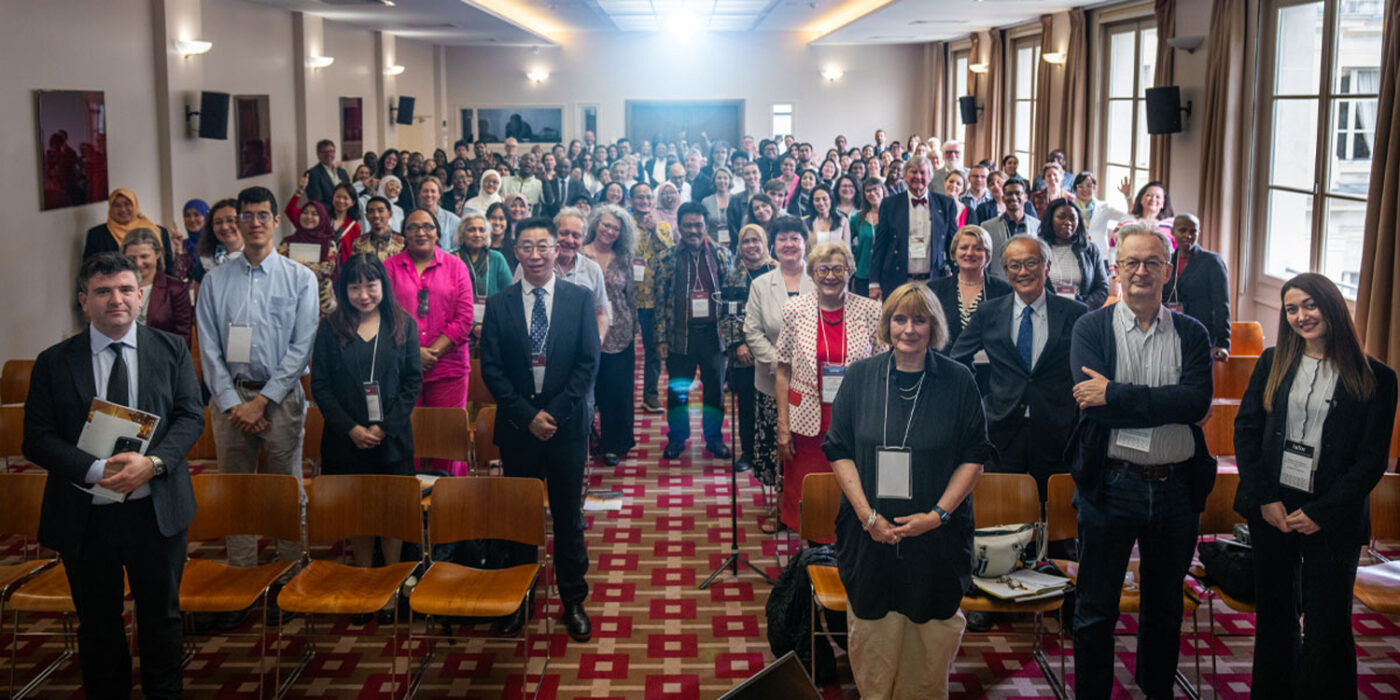
The 5th Paris Conference on Arts & Humanities (PCAH2026)

Partner Logos: IAFOR, IAFOR Research Center, ECPD


June 15-19, 2026 | Sorbonne University International Conference Center (CICSU), Paris, France (& Online)

Bienvenue à Paris!

Welcome to the Paris Conference on Arts & Humanities (PCAH2026), held as a part of IAFOR’s European Conference Series and hosted at the Sorbonne University in 2026.

For centuries, France and its capital, Paris, have been a global intellectual and cultural centre and crossroads, impacting ideas, trends, theories, and practices, in all fields both in and the academy and the wider society. It remains the world’s most influential arbiter of taste, not only in food and wine, but also in fashion and style. This incredibly beautiful city, with its monumental buildings and sweeping designs, has been a literal and metaphorical stage for literal and metaphorical battles of ideas, of systems, of religions, and of countries that have themselves had enormous global ramifications, for good and for bad. The theories and the practices debated and implemented here, and the reforms and revolutions of Paris, have influenced and ignited those around the world.

This storied heritage attracts students and academics from around the world to its leading educational and research institutions, museums, and collections, and while Paris draws on its imposing traditions and cultural heritage, it is a place and space of constant renewal and innovation.

Through its geographically central but open and exposed position, Paris has hosted meetings between nations, cultures, and disciplines for more than two millennia; its historical and cultural richness is a result of these meetings. It is within this intellectual tradition, space, and place that we situate our own event here, in line with the IAFOR mission of ‘encouraging interdisciplinary discussion, facilitating intercultural awareness and promoting international exchange’.

We look forward to welcoming you (back) to Paris!

The 5th Paris Conference on Arts & Humanities (PCAH2026) is an interdisciplinary conference held alongside The 5th Paris Conference on Education (PCE2026). Registration for any of these conferences will allow delegates to attend sessions in the other. In keeping with our mission, we open the plenary sessions to all delegates across the conferences. We do this as every individual delegate has their own different overlapping interests.

The PCAH2026 Programme Committee


Key Information
  • Location & Venue: Sorbonne University International Conference Center (CICSU), Paris, France
  • Dates: Monday, June 15, 2026 ​to Friday, June 19, 2026
  • Early Bird Abstract Submission Deadline: January 15, 2026*
  • Final Abstract Submission Deadline: March 20, 2026
  • Registration Deadline for Presenters: April 30, 2026

*Submit early to take advantage of the discounted registration rates. Learn more about our registration options.

Speakers

  • Paolo Benanti
    Paolo Benanti
    Pontifical Gregorian University, Italy
  • Donald E. Hall
    Donald E. Hall
    Binghamton University, United States
  • Brendan Howe
    Brendan Howe
    Ewha Womans University, South Korea
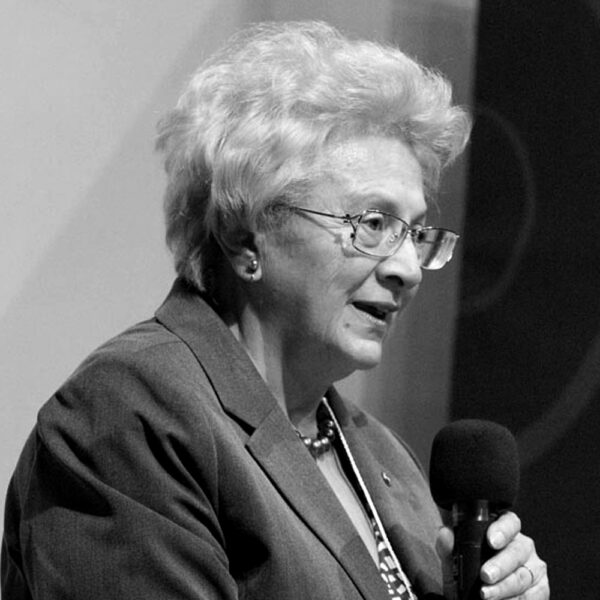
  • Ljiljana Markovic
    Ljiljana Markovic
    European Centre for Peace and Development (ECPD), Serbia

IAFOR's Conference Themes for 2025-2029

IAFOR Themes 2025-2029
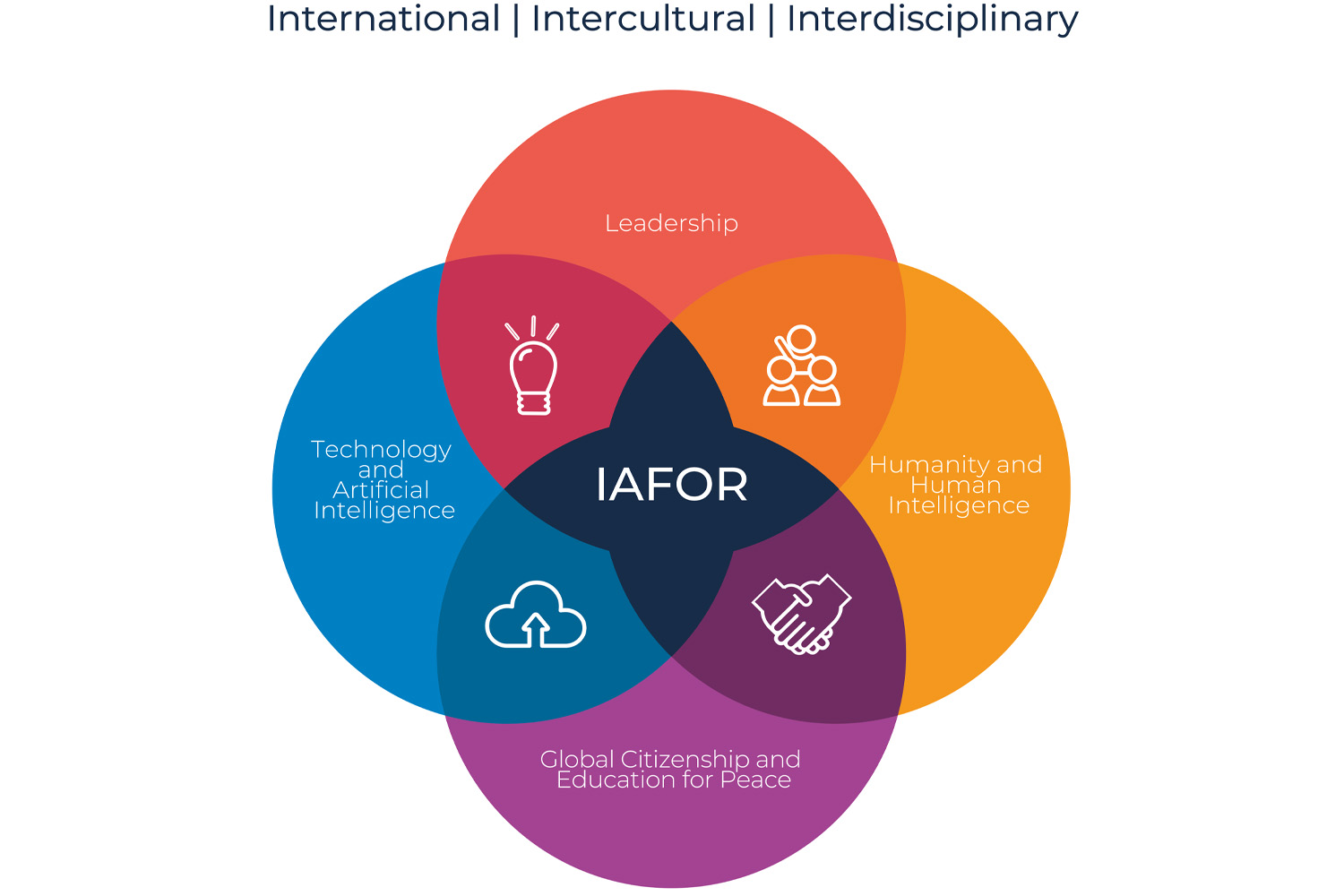
Our selected themes for 2025-2029 bring together ideas and encourage research and synergies in the following areas:

  • Technology and Artificial Intelligence
  • Humanity and Human Intelligence
  • Global Citizenship and Education for Peace
  • Leadership
  • Our four themes can be seen as standalone themes, but they are also very much in conversation with each other. Themes may be seen as corollaries, complementary, or in opposition/juxtaposition with each other. The themes can be considered as widely as possible and are designed, in keeping with our mission, to encourage ideas across the disciplines.


    Conference News


    Sponsorship & Exhibition

    Sponsorship & Exhibition

    Sponsor the Event

    Enhance your brand visibility among a global audience of academics, policymakers, and professionals.

    IAFOR Conference Experience

    Exhibit at the Event

    Showcase your organisation or services in a dynamic conference setting.


    Read Last Year's Conference Report


    About IAFOR

    "Inspiring Global Collaborations"

    Founded in 2009, The International Academic Forum (IAFOR) is a mission-driven politically independent non-partisan and non-profit organisation dedicated to encouraging interdisciplinary discussion, facilitating intercultural awareness and promoting international exchange, principally through educational interaction and academic research. Based in Japan, its main administrative office is in Nagoya, and its research centre is in the Osaka School of International Public Policy (OSIPP), a graduate school of The University of Osaka. IAFOR runs research programs and events in partnership with universities, think tanks, and other associations. Through its international, intercultural and interdisciplinary conferences, research, and publications, IAFOR is a network hub for interdisciplinary discussion across Asia and beyond.
    Read more about IAFOR.

    Paolo Benanti
    Pontifical Gregorian University, Italy

    Biography

    TBA

    Keynote Presentation (2026) | TBA
    Brendan Howe
    Ewha Womans University, South Korea

    Biography

    Dr Brendan Howe is Professor of the Graduate School of International Studies, Ewha Womans University, South Korea, where he has also served as Dean, Associate Dean, and Department Chair. He is the President of the Asian Political and International Studies Association (APISA), and has been elected to serve as the President of the World International Studies Committee from July, 2025. He is currently a Humboldt Foundation Research Fellow at Heidelberg University, Germany, from 2025 through 2026. He has held visiting professorships and research fellowships at the East-West Center as a POSCO Visiting Research Fellow (United States), the Freie Universität Berlin (Germany), De La Salle University (Philippines), The University of Sydney (Australia), Korea National Defence University (South Korea), Georgetown University (United States), Universiti Malaysia Sarawak (Malaysia), and Beijing Foreign Studies University (China).

    Educated at the University of Oxford, the University of Kent at Canterbury (United Kingdom), Trinity College Dublin (Ireland), and Georgetown University (United States), his ongoing research agendas focus on traditional and non-traditional security in East Asia, human security, middle powers, public diplomacy, post-crisis development, comprehensive peacebuilding, and conflict transformation. He has authored, co-authored, or edited around 150 related publications, including Comprehensive Peacebuilding on the Korean Peninsula (Springer, 2023), Society and Democracy in South Korea and Indonesia (Palgrave, 2022), The Niche Diplomacy of Asian Middle Powers (Lexington Books, 2021), UN Governance: Peace and Human Security in Cambodia and Timor-Leste (Springer, 2020), Regional Cooperation for Peace and Development (Routledge, 2018), National Security, State Centricity, and Governance in East Asia (Springer, 2017), Peacekeeping and the Asia-Pacific (Brill, 2016), Democratic Governance in East Asia (Springer, 2015), Post-Conflict Development in East Asia (Ashgate, 2014), and The Protection and Promotion of Human Security in East Asia (Palgrave, 2013).

    Discussion Panel (2026) | 250 Years of Rights Promotion and Cooperation
    Donald E. Hall
    Binghamton University, United States

    Biography

    Donald E. Hall is Provost and Executive Vice President for Academic Affairs at Binghamton University (SUNY), USA. He was formerly Dean of the Faculty of Arts, Sciences, and Engineering at the University of Rochester, USA, and held a previous position as Dean of Arts and Sciences at Lehigh University, USA. Provost Hall has published widely in the fields of British Studies, Gender Theory, Cultural Studies, and Professional Studies. Over the course of his career, he served as Jackson Distinguished Professor of English and Chair of the Department of English (and previously Chair of the Department of Foreign Languages) at West Virginia University. Before that, he was Professor of English and Chair of the Department of English at California State University, Northridge, where he taught for 13 years. He is a recipient of the University Distinguished Teaching Award at CSUN, was a visiting professor at the National University of Rwanda, was Lansdowne Distinguished Visiting Scholar at the University of Victoria (Canada), was Fulbright Distinguished Chair in Cultural Studies at Karl Franzens University in Graz, Austria, and was Fulbright Specialist at the University of Helsinki. He has also taught in Sweden, Romania, Hungary, and China. He served on numerous panels and committees for the Modern Language Association (MLA), including the Task Force on Evaluating Scholarship for Tenure and Promotion, and the Convention Program Committee. In 2012, he served as national President of the Association of Departments of English. From 2013-2017, he served on the Executive Council of the MLA.

    His current and forthcoming work examines issues such as professional responsibility and academic community-building, the dialogics of social change and activist intellectualism, and the Victorian (and our continuing) interest in the deployment of instrumental agency over our social, vocational, and sexual selves. Among his many books and editions are the influential faculty development guides, The Academic Self and The Academic Community, both published by Ohio State University Press. Subjectivities and Reading Sexualities: Hermeneutic Theory and the Future of Queer Studies were both published by Routledge Press. Most recently he and Annamarie Jagose, of the University of Auckland, co-edited a volume titled The Routledge Queer Studies Reader. Though he is a full-time administrator, he continues to lecture worldwide on the value of a liberal arts education and the need for nurturing global competencies in students and interdisciplinary dialogue in and beyond the classroom.

    Featured Roundtable (2026) | Senior Academic Leadership

    Previous Presentations

    Keynote Presentation (2023) | There is No New Normal
    Ljiljana Markovic
    European Centre for Peace and Development (ECPD), Serbia
    Biography

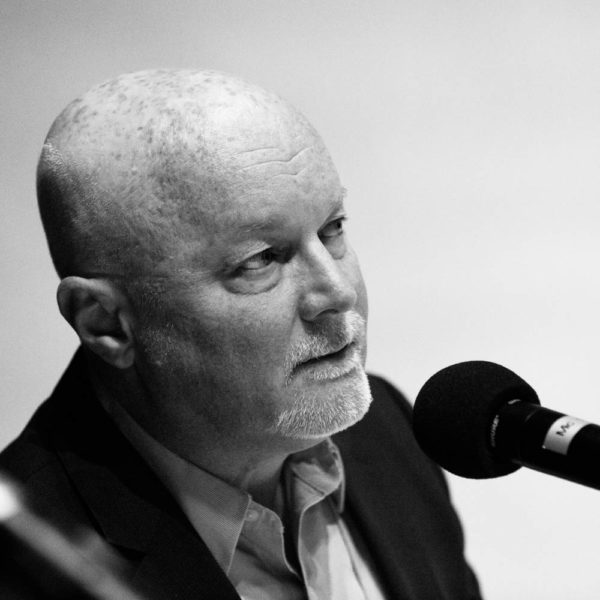
    Ljiljana Markovic is a Professor of Japanese Studies in the European Centre for Peace and Development (ECPD) of the United Nations University for Peace, and Special Advisor to the Executive Director and ECPD Academic Director. She is also a Visiting Professor at Toho University and Osaka University, Japan, and Gabriele d'Annunzio University, Italy.

    Professor Markovic is the author of a large number of publications in the fields of Japanese Studies and Economics. She completed her bachelor’s and master's degrees at Cambridge University, United Kingdom, before pursuing her doctorate at Chuo University, Japan. For many years, she was a Professor at the Faculty of Philology at the University of Belgrade, Serbia, with terms as Dean (2016-2020) and Vice Dean of Financial Affairs (2008-2016). She has served as the Chairperson of the International Silk Road Academic Studies Symposium since 2017.

    Professor Markovic received the Gaimu Daijin Sho Award from the Minister of Foreign Affairs of Japan in 2010. In the following year, she received the Dositej Obradovic Award for Pedagogical Achievement. Professor Markovic recent accolades include the Medal of Merit by the President of Serbia in 2020, the Isidora Sekulic Medal for Academic Achievement in 2021, and the Order of the Rising Sun (Gold Rays with Rosette) in 2022, an Imperial Decoration awarded by the Government of Japan for her "outstanding contribution to establishing and improving friendly relations with Japan”.

    Workshop Presentation (2026) | Senior Academic Leadership

    Previous Presentations

    Workshop Presentation (2025) | Senior Academic Leadership
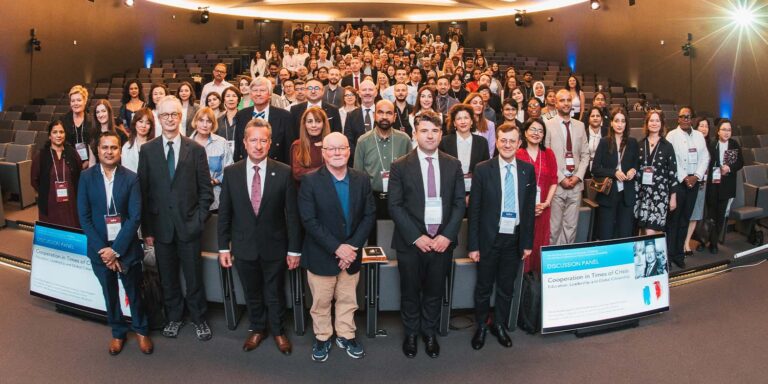
    Panel Discussion (2024) | International and Interdisciplinary Perspectives on Global Citizenship in Times of Change and Crisis